
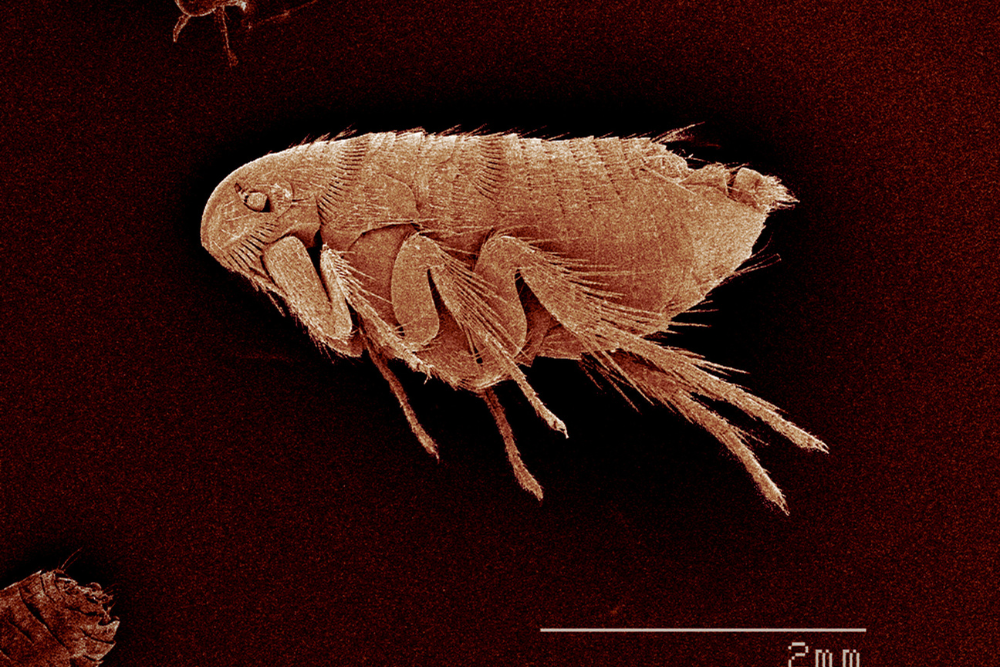
Fleas in dogs and cats are among the most common external parasites affecting household pets. These small, fast-moving insects thrive in nearly every climate because they can survive on animals, inside homes, and on wildlife. Once fleas find a host, they reproduce rapidly and can create a significant infestation in a short period of time.
If you’re researching other parasites that affect pets, checkout our blog for other parasitic and pesty articles.
Understanding the Life Cycle of fleas
The life cycle includes four stages: egg, larva, pupa, and adult. Each stage requires a different approach to control. This is why eliminating them often requires ongoing prevention rather than a single treatment.
Eggs
Adults lay their eggs on pets, but the eggs quickly fall into bedding, furniture, and flooring.
Larvae
Larvae feed on organic debris and flea droppings. They crawl into dark, hidden spaces such as carpeting, cracks, and shaded corners.
Pupae
In the pupal stage, fleas form a protective cocoon. This stage is tough to eliminate because the casing shields them from many treatments. Pupae may remain dormant until they sense vibration or warmth from a nearby pet.
Adults
Once adult fleas emerge, they jump onto a host, begin feeding within minutes, and start laying eggs shortly after. This cycle keeps infestations going unless multiple life stages are targeted.
For more detailed scientific information, the Companion Animal Parasite Council (CAPC) offers an evidence-based overview.
Health Problems
Fleas in dogs and cats can cause far more than simple itching. One of the most common reactions is flea allergy dermatitis, where even a small number of flea bites triggers intense itching and skin irritation. Heavy infestations can also lead to anemia in young or small pets.
Fleas can transmit several diseases and parasites, including:
- Tapeworms (Dipylidium caninum)
- Bartonella (cat scratch disease)
- Murine typhus
- Plague (rare but possible in some regions)
If your pet is itchy but you’re not sure fleas are the cause, our article on common pet allergens and itchiness covers other conditions that can lead to scratching, hair loss, and skin irritation.
Flea Treatments and Prevention
There is no single product able to eliminate every life stage of fleas, especially the resilient pupal stage. Effective flea management usually includes ongoing prevention and environmental care.
Treatment options may include:
- Monthly oral flea preventatives
- Topical medications
- Fast-acting tablets for active infestations
- Environmental cleaning such as vacuuming and washing bedding
Some prescription preventatives also target ticks, mites, and certain internal parasites. If you’d like to explore approved preventatives, the Wedgewood online pharmacy carries trusted options curated for pet safety.
Managing Fleas in the Home
Environmental control is crucial when dealing with fleas in dogs and cats. Vacuuming frequently, washing pet bedding, and reducing access to wildlife can all help break the cycle. Homes with multiple pets should ensure every animal is on flea prevention to reduce reinfestation.
Protecting Pets from Fleas Year-Round
Because fleas can remain active through much of the year, consistent prevention is the best way to protect pets. Monitoring for scratching, flea dirt, or skin irritation can help catch problems early. With regular prevention and prompt attention to symptoms, fleas in dogs and cats can be managed effectively before they lead to larger health concerns.