
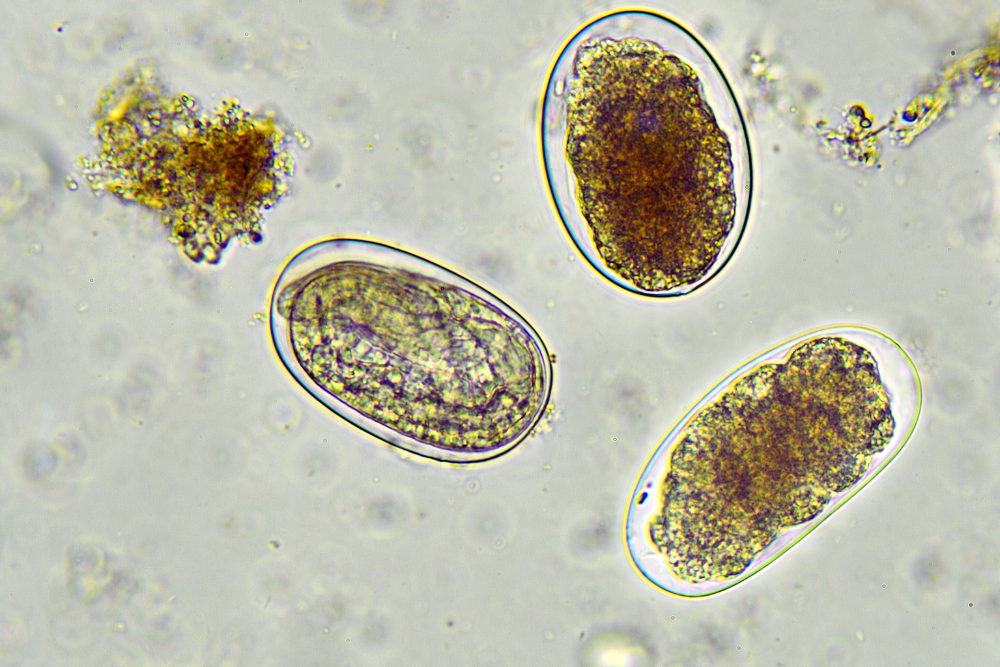
Hookworms are one of the more serious intestinal parasites found in dogs and cats. Although extremely small, often too tiny to see without magnification. They can cause significant illness, especially in puppies and outdoor pets. At Wedgewood Pet Clinic in Oklahoma City, we aim to help pet owners understand how hookworms spread, what symptoms look like, and how to keep pets protected year-round.
For more information on other common parasites, explore our related posts on roundworms, tapeworms, and intestinal parasites.
To learn more about the science behind hookworms, the Companion Animal Parasite Council offers helpful information.
What Are Hookworms?
Hookworms are thin, thread-like parasites that live in the small intestine, where they attach to the lining and feed on blood. They are more common in dogs, but cats can also become infected. These parasites are found worldwide and thrive in warm, humid environments like those in Oklahoma.
How Dogs and Cats Get Hookworm Infections
Pets may contract hookworms in several ways:
- Nursing from an infected mother
- Swallowing contaminated soil, water, or feces
- Larvae penetrating the skin, especially the paws or belly
Because hookworm eggs and larvae can survive in the environment, young pets and those who spend time outdoors are particularly vulnerable.
Symptoms of Hookworms in Dogs and Cats
Hookworms can cause noticeable symptoms because they feed on blood. Common signs include:
- Diarrhea
- Weight loss or poor growth
- Dull coat
- Black, tar-like stool (a sign of bleeding)
- Pale gums
- Lethargy or weakness
Puppies can become dangerously anemic if heavily infected, making early detection especially important.
How Veterinarians Diagnose Hookworms in Pets
Adult hookworms are so small that pet owners rarely see them in stool. Diagnosis typically requires a fecal flotation test, where a veterinarian examines a fresh stool sample under a microscope to identify parasite eggs.
You can bring a fresh sample to your appointment, or collect one at home using our stool sample kit.
Treating Hookworms in Dogs and Cats
Hookworm infections are treatable with prescription deworming medications. Different parasites respond to different medications, so proper diagnosis is essential. Many monthly heartworm prevention medications also protect against hookworms, offering an easy way to reduce the risk of future infections.
To explore prescription preventatives, visit our online pharmacy to Shop parasite prevention.
Treatments may need to be repeated since many products eliminate adult worms but not all developing stages.
Can Hookworms Infect People?
Hookworms are a zoonotic parasite, meaning humans can be affected. Larvae present in contaminated soil can penetrate the skin and cause an itchy, red, winding rash known as cutaneous larval migrans. While treatable, this condition is preventable with good hygiene, routine yard cleaning, and keeping pets on parasite prevention.
The CDC provides additional information about human exposure and prevention.
Protecting Your Pets Year-Round
Routine parasite prevention is one of the simplest ways to protect pets from hookworms and other intestinal parasites. Regular fecal exams, prompt clean-up of outdoor waste, and monthly preventatives all play a role in keeping pets healthy. If your pet is showing digestive changes, pale gums, or any symptoms listed above, an exam and stool test can help determine the cause and begin appropriate treatment.