
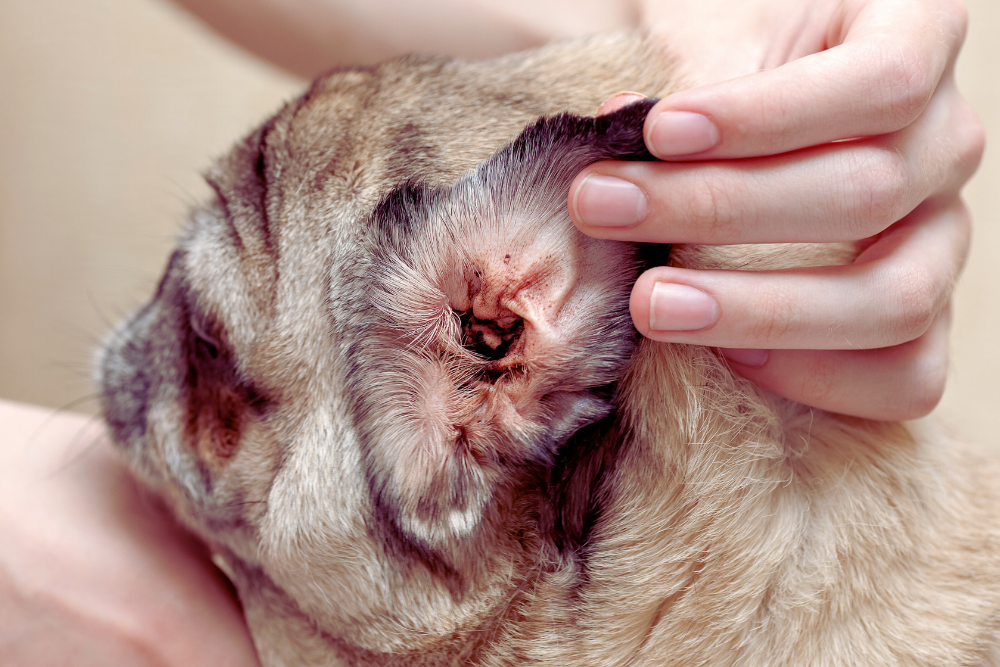
Mites in dogs and cats are a common cause of skin irritation, itching, hair loss, and discomfort. These microscopic arthropods can affect the skin, ears, and even the mucous membranes of household pets. They can also infect wildlife, birds, and reptiles, making exposure possible in many environments. Understanding the different types of mites, what symptoms they cause, and how they spread can help pet owners respond quickly and protect their pets.
Pet owners interested in learning about additional parasites can also explore our articles on roundworms, tapeworms, and intestinal parasites.
For scientific background, the Companion Animal Parasite Council (CAPC) provides trusted guidance.
Common Types
Several species of mites can infect household pets. The most frequently diagnosed include ear mites, Demodex mites, scabies mites, and Cheyletiella mites. Each type of mite affects pets differently, making accurate identification essential.
Ear Mites in Dogs and Cats
Ear mites are especially common in cats but can also infect dogs. These mites live inside the ear canal, where they cause irritation, scratching, head shaking, and dark debris that resembles coffee grounds. Because ear mites in dogs and cats are highly contagious, all pets in the household should be examined and potentially treated if one pet is diagnosed.
A different species of ear mite can affect rabbits, adding another layer of cross-species transmission risk in multi-pet homes.
Demodex Mites in Dogs and Cats
Demodex mites naturally live on the skin of dogs, and most pets never experience a problem. However, some pets develop demodectic mange when their immune system cannot control mite populations. Puppies with Demodex often develop small patches of hair loss on the face or front legs. Adult dogs may develop more extensive redness, scaling, and irritation.
Because adult-onset Demodex is often associated with immune suppression, veterinarians will frequently screen for underlying diseases such as hypothyroidism, Cushing’s disease, or cancer. Cats also have their own species of Demodex, though Demodex mites in cats are diagnosed far less often.
Scabies (Sarcoptes)
Scabies, also known as sarcoptic mange, is a highly contagious skin disease caused by Sarcoptes mites. Dogs with scabies are typically extremely itchy, often scratching to the point of hair loss and skin injury. Although most human cases are caused by the human scabies mite, people can develop temporary skin lesions from contact with scabies mites in dogs and cats.
Scabies in pets is medically significant and warrants prompt treatment and isolation from other animals.
Cheyletiella Mites
Cheyletiella mites can affect dogs, rabbits, and occasionally cats. These mites cause excessive dandruff-like flakes and are sometimes referred to as “walking dandruff.” Cheyletiella mites are particularly common in puppies and young pets.
Because Cheyletiella mites in dogs and cats are contagious, affected pets often require environmental cleaning and treatment of all animals in the home.
How Mites Are Treated
There is no single medication that treats every type of mite infestation. The correct treatment depends on which mite is involved, the severity of the symptoms, and whether other pets in the home are affected. Your veterinarian may recommend:
- Prescription topical mite treatments
- Medicated shampoos or dips
- Oral parasite-control medications
- Follow-up skin scrapings to confirm progress
- Treating all pets in contact to prevent reinfestation
Many modern parasite preventatives can help reduce the risk of mites in dogs and cats. You can browse parasite-control products through our online pharmacy:
Shop parasite prevention
Protecting Pets From Mite Infestations
Regular grooming, routine veterinary checkups, and early treatment of skin irritation can greatly reduce the risk of mites in dogs and cats. Keeping bedding clean, limiting exposure to stray animals, and maintaining year-round parasite prevention are also helpful measures. If your pet develops sudden itching, hair loss, or flaky skin, a veterinary exam is the best way to determine whether mites are involved and what treatment will help. Additional information on “mites” can be found at AVMA.org.