
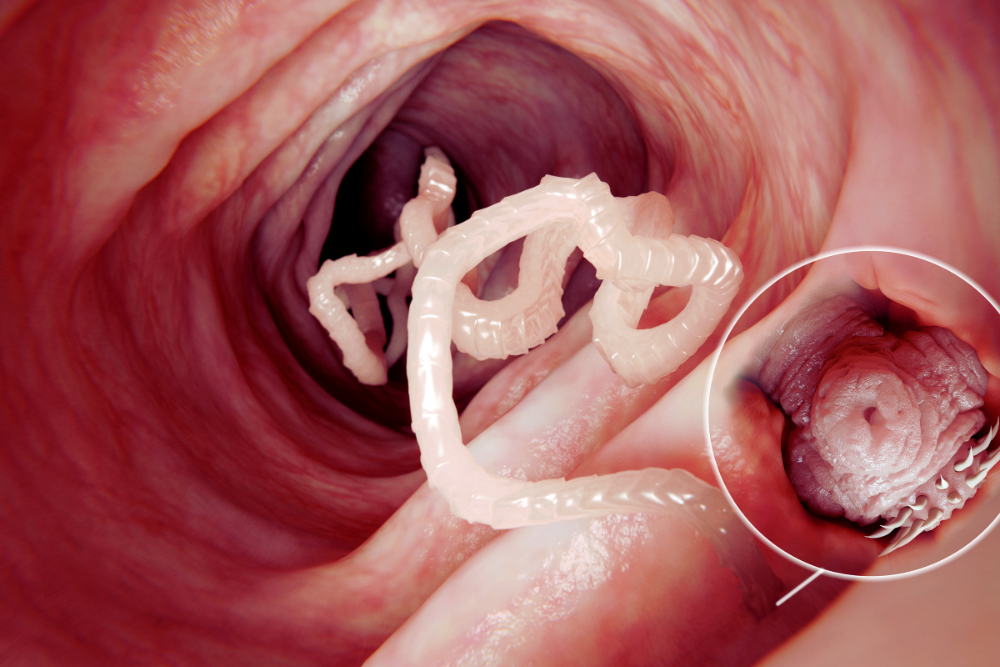
Intestinal parasites are extremely common in dogs and cats and can cause a range of health problems if left untreated. Many of these parasites are found all over the world, including here in Oklahoma, and can survive in the environment for long periods. Understanding how they spread and how to protect your pet is an important part of routine veterinary care.
Common Intestinal Worms in Dogs and Cats
Several types of worms can infect a pet’s gastrointestinal (GI) tract. The most frequently diagnosed include roundworms, hookworms, and whipworms. These parasites shed microscopic eggs into a pet’s stool. Once in the environment, the eggs can contaminate soil, grass, and outdoor spaces. Some eggs remain infective for years, increasing the risk of re-infection or exposure to other animals.
Pets become infected when they accidentally ingest parasite eggs from contaminated soil, feces, or objects. Once inside the GI tract, the eggs develop into adult worms and continue the life cycle.
Tapeworms: A Different Type of Intestinal Parasite
Tapeworms are also common, but their life cycle requires an intermediate host. The most frequent host is the flea. Pets become infected when they swallow an infected flea, often while grooming. Other hosts may include small wildlife such as mice, rats, or rabbits.
Eating an adult tapeworm or a shed tapeworm segment will not cause an infection. The parasite must enter the body through an infected intermediate host for the life cycle to continue.
Protozoal Parasites: Giardia & Coccidia
Not all GI parasites are worms. Some are protozoa, which are tiny one-celled organisms that infect the intestines. Two of the most common protozoal infections in pets are Giardia and coccidia. These parasites can be transmitted through contaminated feces, infected animals, or polluted water sources such as puddles, ponds, or outdoor water bowls.
Diagnosis requires microscopic evaluation of a fresh stool sample. Your veterinarian or their diagnostic laboratory will look for eggs, cysts, or the parasites themselves under the microscope.
What Parasites Can You See in the Stool?
Most intestinal parasites are not visible without magnification. However, two may occasionally be seen by pet owners.
Roundworms
- Ivory-colored
- Smooth and round
- Typically 4–6 inches long
- Resemble spaghetti
Tapeworms
- Flat, segmented worms
- Adults grow several feet long, but pet owners usually see only tiny segments
- Segments look like rice grains or sesame seeds near the tail or in bedding
Even if your pet’s stool looks normal, they may still be carrying parasites. Many infections produce microscopic evidence only.
Why Identifying the Parasite Matters
There is no single medication that treats all intestinal parasites. Your veterinarian must identify the specific parasite present to prescribe effective treatment. Some monthly heartworm preventatives also protect against roundworms, hookworms, and whipworms, making them an important part of year-round wellness.
When to Call Your Veterinarian
If you notice any digestive changes, weight loss, scooting, visible worms, or anything unusual in your pet’s stool, contact your veterinarian promptly. Early testing and treatment help protect your pet’s health and prevent parasites from spreading in the environment.
Wedgewood Pet Clinic provides comprehensive parasite testing, clear diagnosis, personalized treatment plans, and year-round prevention options to keep your pet healthy and parasite-free. If you suspect an issue, you can schedule an exam with us or simply bring in a fresh stool sample for evaluation.
For added convenience, you can also collect a sample at home using our stool collection kit, available through our online store.
We’re here to help you keep your pets protected and feeling their best, reach out anytime with questions or concerns.