
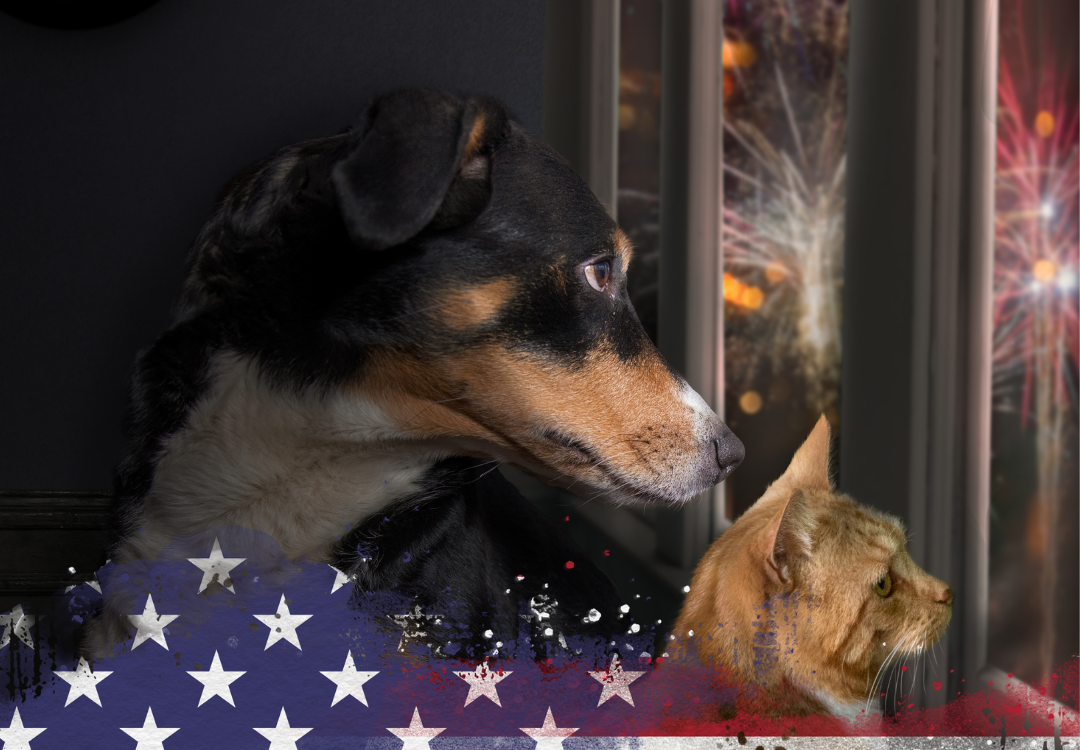
Prepare your pet for the fireworks season before the first firework goes off. Yes, prepare whether your pet shows mild stress or full panic, having a plan in place ahead of time makes the experience safer and less overwhelming for everyone involved. This guide covers anxiety management, safety steps to take before celebrations begin, and why microchipping and ID are especially important this time of year.
Why Pets Struggle With Fireworks
Pets experience fireworks differently than humans do. Dogs and cats have hearing ranges that extend well beyond ours, which means the sound is louder and more disorienting for them than it is for us. The unpredictability of the noise makes it harder to process. Unlike a thunderstorm, which often builds gradually, fireworks start and stop without warning and can go on for hours.
Beyond the noise, fireworks celebrations tend to mean open doors, distracted people, outdoor gatherings, and general disruption to routine. That combination creates the conditions for a pet to slip out unnoticed, and many do.
More pets go missing around major holiday celebrations than at almost any other time of year. The majority of those disappearances happen because of noise-related panic, not negligence. A normally calm pet can bolt when something startles them, but knowing this ahead of time lets you prepare for it properly during fireworks season.
Prepare your pet for fireworks season with ID and Microchipping
Before fireworks season arrives, the single most important thing you can do to prepare is make sure your pet can be identified if they get out.
Check collar tags first. Look at the tag your pet wears every day. Can you read the phone number clearly? Is the tag firmly attached? Has your contact information changed since the tag was made? Faded and worn tags are more common than most pet owners realize, and they are easy to replace.
Verify your microchip registration. A microchip is only useful if it is registered with current contact information. If your pet has been chipped, you can check their registration at aaha.org, and use their microchip registry lookup tool, which searches across multiple national databases. If your phone number, email, or address has changed since your pet was chipped, update it now.
Get your pet chipped if they are not already. Microchipping is fast, inexpensive, and permanent. Unlike a collar, a chip cannot fall off or be removed. If a lost pet is brought to a shelter or veterinary clinic, scanning for a chip is one of the first things that happens. A registered chip with current information is often what gets a pet home.
Keep Pets Indoors During Celebrations
This one is a simple task but worth saying directly: the safest place for your pet during fireworks season is inside your home.
This applies to dogs who seem calm, cats who have never shown any signs of anxiety, and pets who have been fine in the past. Noise-related panic can happen without warning, and a pet that has never bolted can still bolt once. Bring them in before the fireworks start, not after.
Once they are inside:
- Make sure doors, windows, and gates are secure. It only takes a second for a startled pet to push through an unsecured door or screen.
- Set up a quiet space where your pet feels safe. A crate, a closet, or a back bedroom away from windows can all work. Familiar bedding and a piece of your clothing can help.
- Leave background noise running. A TV, radio, or fan provides consistent sound that helps mask the unpredictable bursts outside.
- Do not bring pets to outdoor events where fireworks will be set off. Even if your dog loves being around people, the combination of noise, crowds, and limited escape options is too much for most animals to handle comfortably.
Managing Anxiety Before and During Firework season
If your pet has shown anxiety around loud noise before, plan ahead rather than reacting in the moment.
For mild anxiety: Anxiety wraps like Thundershirts work for some pets and are worth trying. They apply light, consistent pressure that some animals find calming. Calming supplements with ingredients like melatonin or L-theanine are another low-risk option. Pheromone products like Adaptil for dogs and Feliway for cats can also help reduce overall stress.
For moderate to severe anxiety: This is where a conversation with your veterinarian matters most. There are prescription medications designed specifically for situational anxiety that are safe, effective, and fast-acting. They work best when you have them on hand before the night of the event, not when you are trying to call a clinic after hours during a celebration.
If your pet has struggled with fireworks or storm anxiety in the past, do not wait until the next event to address it. Schedule a visit and talk through what options make sense for your specific pet.
One important note: do not give your pet human anxiety medication or any medication not prescribed specifically for them. Some human medications are dangerous for pets, and dosing is not interchangeable.
What to Do If Your Pet ESCAPES
Even with every precaution, things happen. If your pet escapes during a fireworks event, move quickly.
Search nearby first and call their name calmly. Scared pets often hide close to home rather than running far.
Call your local animal shelter and animal control immediately. Do not wait. Animals are brought in throughout the day and sometimes within hours of going missing. In Oklahoma City, that is OKC Animal Welfare at 405-297-3100.
Post on local lost pet Facebook groups right away. Include a clear photo, the area where your pet went missing, and your contact number. These groups share quickly and neighbors often spot animals before shelters do.
Put up simple flyers in your immediate neighborhood. Delivery drivers, mail carriers, and kids playing outside are some of the most reliable ways to locate a missing pet.
Keep checking the shelter in person. A phone report is not the same as staff knowing your face and your pet’s description.
A Few Things Worth Doing Right Now
You do not have to do all of this the night before a celebration. Most of it takes less than fifteen minutes and can be done any time.
- Look up your pet’s microchip registration and confirm the contact information is current.
- Check their collar tag for readability and fit.
- Walk your fence line and check latches and gate locks.
- Think about where your pet feels safest indoors and set that space up before you need it.
If your pet has anxiety or health conditions that make loud events difficult, call your veterinarian now so you have time to discuss options and fill any prescriptions before you need them.
Fireworks season does not have to be a stressful time for your pet. A little preparation goes a long way, and most of it starts well before the first firework goes off.
Wedgewood Pet Clinic is located 4201 Northwest Expressway in Oklahoma City, OK. If you have questions about anxiety management, microchipping, or anything else that comes up this summer. We are open Monday through Sunday, 7 days a week, from 8 AM to 6 PM. Give us a call at 405-848-3329.