
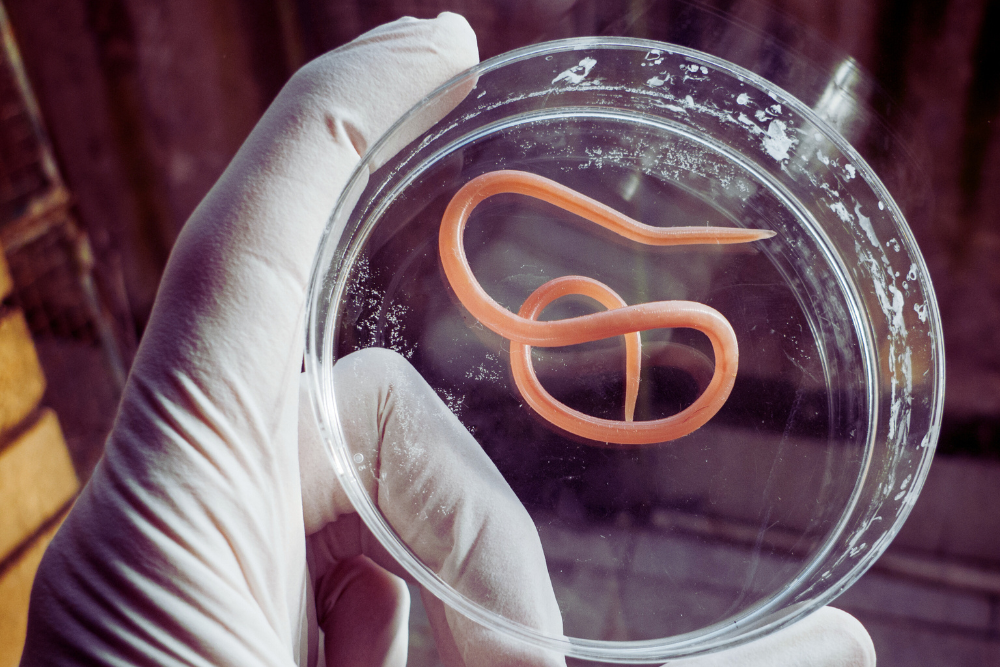
Roundworms are among the most common intestinal parasites found in dogs and cats, especially in young pets. These worms also affect wildlife, particularly raccoons, and can pose health risks to people. Understanding how roundworms spread, the signs to watch for, and how to protect your family is an important part of responsible pet care.
How Pets Become Infected
Puppies and kittens are especially vulnerable to roundworms.
- Puppies are often born already infected, having contracted the parasite from their mother before birth.
- Kittens can pick up roundworms through their mother’s milk or contact with contaminated feces.
Adult roundworms are long, smooth, ivory-colored worms that typically measure 4–6 inches in length. Because they are round rather than flat, they resemble pieces of cooked spaghetti.
Symptoms of Roundworms in Pets
Roundworm infections can cause a variety of digestive and respiratory symptoms, especially in young or growing animals. Signs may include:
- Diarrhea
- Vomiting
- Weight loss or poor growth
- A pot-bellied appearance
- Coughing (as larvae migrate through the lungs)
Most pet owners never see adult worms, even when an infection is significant. That’s why regular veterinary testing is essential.
How Veterinarians Diagnose Roundworms
At Wedgewood Pet Clinic, we check for roundworms by examining a stool sample under a microscope to look for parasite eggs.
Please bring a fresh stool sample (produced the same day) to your puppy or kitten’s appointment so we can perform accurate testing.
Can People Get Roundworms?
Yes. Roundworms are considered a zoonotic parasite, meaning they can be transmitted from animals to people. The Centers for Disease Control (CDC) estimates that approximately 14% of Americans have been exposed to Toxocara, the most common roundworm in dogs and cats.
Many infected people have no symptoms, but the parasite can sometimes cause severe health issues. In children especially, migrating larvae can lead to:
- Vision problems or blindness
- Organ inflammation
- Fever or fatigue
- Serious systemic illness
Roundworm eggs are incredibly hardy and can survive in soil, sand, playgrounds, and yards for up to 10 years.
The Most Dangerous Roundworm: Baylisascaris
A more serious roundworm, Baylisascaris procyonis, is commonly carried by raccoons. This parasite has a dangerous tendency to migrate to the brain and nervous system. Human infections, even though it is rare, can cause severe, permanent neurological damage, especially in children.
If raccoons frequent your property, as they so often do in Oklahoma:
- Treat raccoon feces as hazardous waste.
- Wear disposable gloves.
- Double-bag and discard the stool safely.
- Know that roundworm eggs in soil are resistant to most cleaners, so only high heat or fire destroys them.
Preventing Roundworms in Your Pets
The CDC strongly recommends routine deworming for all puppies and kittens. During your first visit, we will provide a safe and effective deworming medication based on your pet’s age and weight.
The most reliable prevention is monthly parasite prevention (often called “heartworm prevention”). Many of these medications also protect against roundworms, making them an essential part of your pet’s year-round wellness plan.
CDC Prevention Tips for Families
To reduce roundworm exposure to people and pets:
- Keep dogs and cats under regular veterinary care, including routine deworming.
- Pick up and dispose of pet waste promptly.
- Keep your yard and outdoor play areas clean.
- Wash your hands after handling pets or soil.
- Keep children away from areas where animals may have defecated.
- Cover outdoor sandboxes.
- Teach children not to eat dirt or put dirty hands in their mouths.