
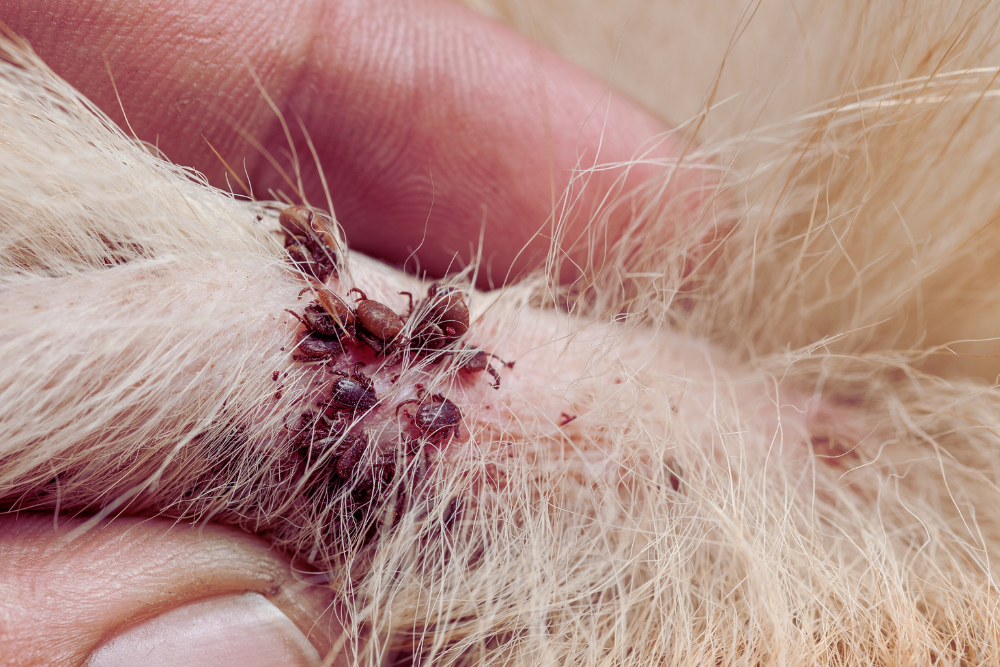
Ticks on dogs and cats are a serious concern in Oklahoma and many other regions. These small, wingless parasites survive by feeding on the blood of mammals, birds, and sometimes reptiles. Once attached, they can remain anchored for days, increasing the risk of irritation and the spread of tick-borne diseases. Understanding how ticks behave and how to prevent them can help keep pets safe throughout the year.
How Ticks Attach to Pets
Ticks cannot jump or fly. Instead, they climb to the tips of grass or low vegetation and wait for a passing animal. When a dog or cat brushes against the plant, the tick grabs on and moves through the fur to attach. Their barbed mouthparts, known as the hypostome, lock them firmly in place while they feed.
Ticks may drop off on their own after feeding, but this process can take several days. Because embedded mouthparts can remain in the skin, proper removal is important.
The CDC recommends the following method of tick removal:
- Use clean tweezers and grasp the tick as close to the skin as possible.
- Pull upward with steady, even pressure without twisting or crushing the body.
- If small mouthparts remain, allow the area to heal; they typically work out naturally.
- Dispose of the tick by sealing it, taping it, flushing it, or placing it in alcohol.
- Clean the bite site and hands with soap and water or an alcohol-based cleaner.
- After removal, check the rest of the pet’s body carefully for additional ticks.
Where Ticks Thrive
Ticks on dogs and cats are frequently picked up in wooded or brushy areas, tall grass, and shaded outdoor spaces, which is why we see so many in Oklahoma. Even trimmed lawns can expose pets to ticks, especially if wildlife such as deer, rabbits, raccoons, or rodents frequent the property. Read more about common ticks in Oklahoma.
Diseases Spread by Ticks
Ticks are second only to mosquitoes in transmitting infectious diseases. Hard-bodied species can spread multiple pathogens to pets and people, including:
- Lyme disease
- Rocky Mountain spotted fever
- Ehrlichiosis
- Tularemia
- Relapsing fever
- Babesiosis
- Anaplasmosis
- Cytauxzoonosis (a severe disease in cats)
Signs Your Pet May Have a Tick Problem
Some pets show mild irritation where a tick attaches, while others may develop symptoms related to a transmitted disease. Watch for:
- Fever
- Loss of appetite
- Sudden lameness
- Lethargy
- Swollen lymph nodes
Because itching and skin irritation are not always caused by parasites, owners may also benefit from our overview of allergies and pet itchiness to understand other causes of scratching.
Tick Prevention and Treatment Options
Preventing ticks on dogs and cats usually involves a combination of medication and environmental care. Many modern preventatives come as combination flea-and-tick products, offering broad coverage against both parasites. Learn more about flea infestations in pets.
Depending on your pet’s needs, veterinarians may recommend:
- Monthly oral preventatives
- Monthly topical preventatives
- Fast-acting treatments for existing ticks
- Yard and home management to reduce tick habitat
Environmental measures include trimming grass, removing brush, clearing leaf litter, and reducing wildlife attractants around the home.
Helping Pets Stay Tick-Free
Regular tick checks, especially after walks, hikes, or outdoor play, can help catch ticks early before they transmit disease. Consistent use of a veterinarian-approved preventative provides the best long-term protection. With routine monitoring and preventive care, ticks on dogs and cats can be managed effectively throughout the year.